
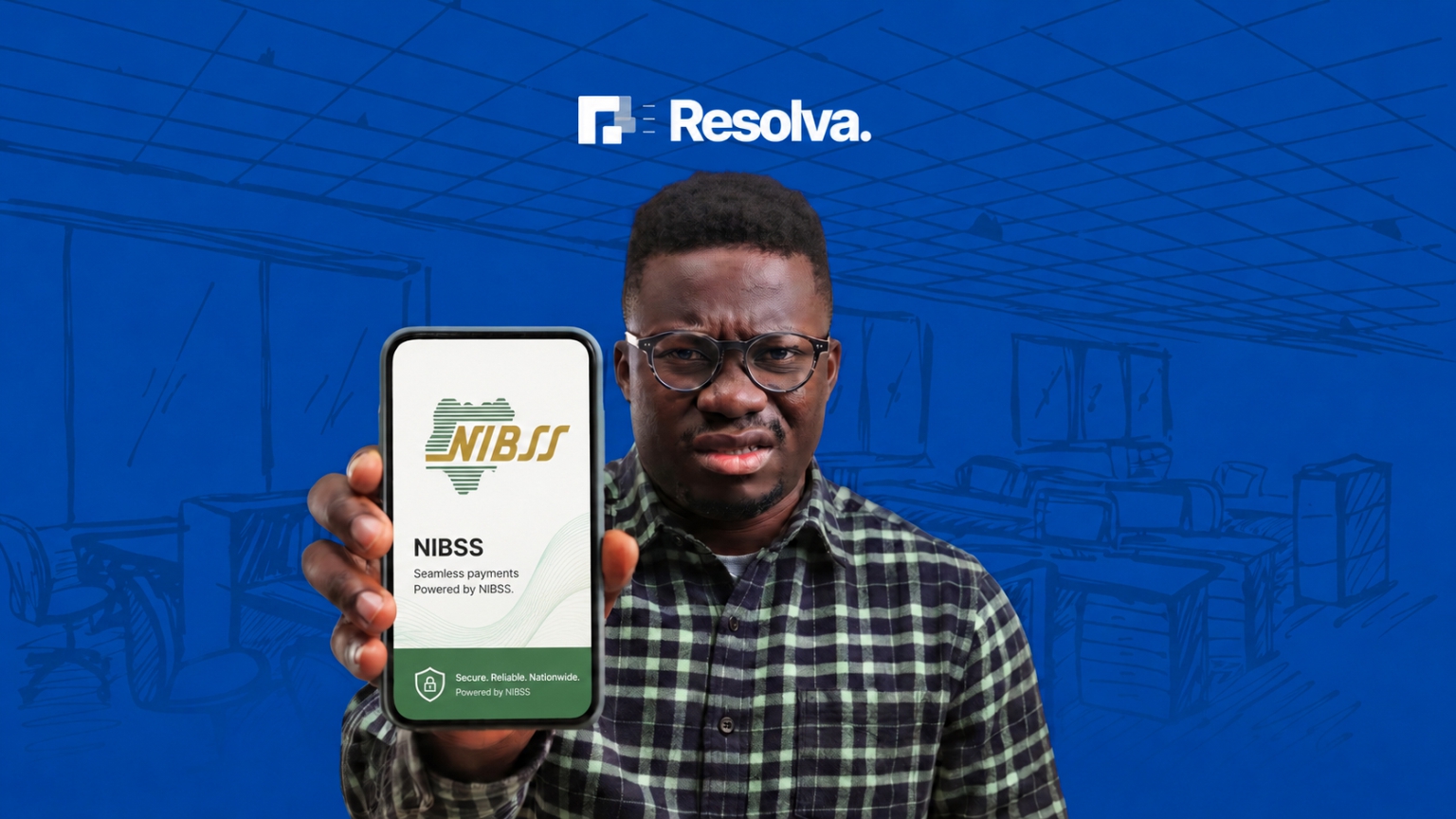

It’s a Friday evening at the supermarket. The groceries you bought are already packed, the cashier has read out your bill, and you’ve opened your bank app and sent the money. Then nothing happens. No alert on her screen. You try once more. Still nothing. Behind you, the queue starts doing that thing where nobody says anything but everybody is staring at you.
You didn’t do anything wrong. Your bank didn’t either. Something you’ve probably never heard of just picked the worst possible moment to stop working, and its name is NIBSS.
Most Nigerians only learn about it on the bad days. The rest of the time it quietly moves an unbelievable amount of money: ₦1.07 quadrillion in 2024 alone, across 12 billion transfers, most of them landing in under ten seconds. So let’s talk about what NIBSS is, what it does, why it sometimes fails, and what you can do on the days it does.
In this Post
What is NIBSS?
NIBSS means Nigeria Inter-Bank Settlement System. It was launched by the Central Bank of Nigeria (CBN) in collaboration with the Bankers’ Committee and all licensed commercial banks in Nigeria in 1993 and commenced operations in 1994. NIBSS serves as the central processor or switch that powers all electronic financial transactions and interbank money transfers across Nigeria.
Here’s the simplest way to picture it: Your money sits with your bank. Your sister’s money sits with her bank. When you make a bank transfer to her, the two banks don’t hand cash to each other or ring each other up. NIBSS is the go-between that carries the message and keeps a record of who needs to settle who.
You’ll never open an account with NIBSS but you’ve been using it several times a day, for years, without even knowing.
What Does NIBSS Actually Do?
The Nigeria Inter-Bank Settlement System (NIBSS) acts as the highway for Nigeria’s financial ecosystem. Its primary job is to ensure that money, data, and payment instructions move safely and instantly between different banks and fintech platforms.
1. Instant Bank Transfers
Every Naira you move from one bank to another passes through NIBSS on the way. NIBSS Instant Payment (NIP) is the engine behind instant interbank transfers via mobile apps, USSD codes, and internet banking. It connects commercial banks, merchant banks, microfinance banks, and mobile wallets into one single network.
2. BVN Management
NIBSS handles Nigeria’s central biometric identification system for bank accounts. Bank Verification Number (BVN) is an 11-digit unique identifier assigned to every bank customer in Nigeria by the Central Bank of Nigeria (CBN).
3. Automated Bulk Payments
NIBSS Automated Payment System (NAPS) is used for bulk electronic payments like corporate salaries and vendor distributions.
4. POS and ATM Payments
NIBSS handles the central POS switch technology that routes and processes Point-of-Sale (POS) terminal and ATM card payments nationwide.
5. Settlement and Reconciliation
At the end of every business day, NIBSS calculates exactly how much total cash Bank A owes Bank B based on all the millions of transfers that happened that day. It compiles these final balances and sends them to the Central Bank of Nigeria (CBN) to move the actual physical settlement reserves.
What is NIBSS Downtime?
NIBSS downtime is a service disruption on the central payment network connecting all Nigerian banks and fintech applications, which stops or delays money transfers nationwide. Your bank is fine. Your money is fine. But since the path between banks is blocked, nothing gets across.
Here’s how it might show up:
- Your account is debited, but the other person never gets an alert.
- The app rejects the payment outright, even after multiple attempts.
- The credit finally arrives, hours after you needed it.
- POS machines and ATMs stop responding.
What makes it so annoying is that nothing looks broken from where you’re standing. You only find out something is wrong when you’ve already attempted a transfer.
Two incidents of NIBSS downtimes have happened recently in 2026. On 16 April, everything stopped for nine hours and twenty-six minutes. Then on 26 May, the eve of Eid al-Adha, when families were buying rams, travelling and sending money home, it happened again for roughly ten hours. Plenty of people were debited that day without a single Naira reaching the other side.
Why Does It Happen?
Rarely one reason. Reports on the repeated outages point to a few things. Most times, it’s simply that people are sending far more money than the infrastructure can handle. This usually happens on busy days, salary week, festive periods, and anytime when everyone taps send at the same time. Also, downtimes may be as a result of ongoing maintenance.
How NIBSS Downtime Affects You
It depends on which side of the counter you’re standing on.
When you’re the one paying, you feel it socially before you feel it financially. You’re apologising to a cashier, your landlord, or to your uber driver when the debit goes through with no credit on the other end. The issue is that your money is stuck somewhere between two banks and nobody can tell you exactly when it’ll show up.
When you run a business, it’s quieter and costs more. Take Chinedu, who sells gadgets in Abuja, for example. A customer comes in and tries to pay but the transfer refuses to move. After five minutes of trying, she says she’ll come back later. She won’t. Meanwhile, his supplier is hounding him for money he genuinely sent that morning. None of this was his fault, but it looks that way from outside.
When you deal in crypto, selling it on a peer-to-peer platform during a NIBSS downtime is where this gets ugly. Your coins are locked up on the platform, your buyer insists he has paid but no alert has landed, and now you’re arguing with a stranger about a delay neither of you caused. It’s a relatable situation we’ve written about before: having a fully funded wallet and still not being able to buy anything.
What to Do When Your Money Is Stuck
- Don’t keep pressing send. This is how one payment turns into three debits. Breathe first.
- Find out whether it’s just you. Your bank’s status page, or thirty seconds on X, will tell you. If the whole country is shouting, it’s probably NIBSS.
- Screenshot everything. The debit alert and the reference number. You’ll want them later.
- Give it time to come back. Most stuck payments reverse on their own once things settle, usually within a day.
- Escalate if it doesn’t. Nothing by the next working day? Contact your bank, quote the reference, and put it in writing so there’s a trail.
- Keep a plan B. Some cash, a second bank, another way to pay. On days like this, having options is the difference between paying and apologising.
Where Resolva Comes In
We’ll be honest with you: Resolva sends Naira to Nigerian bank accounts, so when the NIBSS servers between banks experience downtimes, Naira settlement is delayed.
But here’s the upside of using Resolva in such moments:
1. Nobody is holding your coins
There’s no stranger on the other side of your trade, no one to chase, and nothing to argue about while you wait.
2. The rate stays where you left it
You see your Naira amount before you send, and that’s the exact amount you’ll get. A NIBSS downtime delay doesn’t quietly turn into a worse deal.
3. There’s Less that can go wrong
Spending crypto usually means two separate steps: convert first and then move the money. This creates two points where you can be let down. With Resolva, you can go from crypto to bank transfers in a single flow, meaning there are less points of failure.
4. Your Payment is Guaranteed
NIBSS downtimes may cause delays in Naira settlement but one thing is sure with Resolva: you’ll get paid.
Ready to Spend Your Crypto in Nigeria?
Become a Resolva Pal today. Send crypto, and Naira lands in any Nigerian bank account. Download the Resolva app, and set up in less than a minute.
Quick FAQs
What does NIBSS stand for?
The Nigeria Inter-Bank Settlement System is the shared setup that moves payments between Nigerian banks. It is owned by the Central Bank and all licensed banks.
Is NIBSS a bank?
No. It doesn’t keep your money or offer accounts. It’s simply the link between the banks that do.
How do I know if NIBSS is down?
Check your bank’s status page, or see whether other people are complaining about the same thing online. Banks and fintechs usually announce it once enough customers are affected.
Will I get my money back if a payment fails during NIBSS downtime?
Usually, yes. Stuck payments are typically reversed or processed once things stabilise, often within 24 hours. If yours hasn’t been settled by the next working day, take your reference number to your bank.
Does NIBSS downtime affect crypto?
Your coins are untouched. The crypto side of things keeps running smoothly even during a NIBSS downtime. What gets delayed is the Naira settlement during crypto-to-naira transactions because any payment reaching a Nigerian bank account uses the NIBSS route.